Showing posts with label Soundtracks. Show all posts

Friday, April 13, 2007

Quotes


I received this morning an email from Semih Tareen, who directed last year a short film called "Yellow". As the name says it is a tribute to Giallo and Mario Bava in particular.

Breaking the editorial and layout rule of this blog (one picture, one point of view, one practical paragraph - never show films), I have decided to share it with you as it is not only very well made, but also a rather entertaining exercise spotting all the "quotes" Semih Tareen put in his film.

Here's what I noticed:
Lighting inspired from Bava's Blood and Black Lace and Argento's Suspiria,
Tree shadow behind windows from the appartment scene in Bava's Girl who knew too much,
Close ups on eyes a la Fulci,
Drawer with gloves and knife from Argento's Bird with the crystal plumage's introducing scene,
Scene with glove on girl's mouth from Bava's Girl who knew too much, Lenzi's Seven blood stained orchids and Argento's Bird with the crystal plumage,
Crime scene music in Goblin's style,
And more surprisingly, checkboard scene and music in typical Thomas Crown Affair's style, by Norman Jewison (soundtrack from Michel Legrand).

There must be some other references I may have missed on, so feel free to add them in the comments section.

Tuesday, March 13, 2007

Bringing something subtle to the table


How can you get away with using a chainsaw in a Giallo so it does not feel gross?
First, if you are Duccio Tessari, who knows how to make beautiful images, it helps. Then, you can set your film in Portofino, a rather eye-pleasing scenery.
This is the case for "L'uomo senza memoria" (Puzzle, 1974), which I previously talked about.

But the secret weapon is having your score composed by Gianni Ferrio, one of the most elegant film music composers of the golden years of Italian genre cinema.

From the very first seconds of the film, you cannot help being transported by the opening piece, "Labyrinthus", sung by Rosella. Ferrio's trademark, exquisite and crafted melodies, is once again performing magic to get you in the movie as we see shots of London streets, where the story starts.

Let me insist on this: in this film, it is the music which leads the film and sets the theme and the mood. "Labyrinthus" could have been the movie title, as it perfectly encapsulates what this giallo is about. The intricacies of memory and how a man struck with amnesia is faced with snapshots of his dark past life.
How this past is actually reconstructed step by step through both the reactions of people around him and the images and feelings these reactions trigger in his failing memory.

A man lost in the labyrinth of his mind, hesitating, in doubt, anxious, and one guide only throughout the film: the music, which literally works as the backbone of the story and holds the pieces of the puzzle together.

Until the end where, all of a sudden, we are ourselves in doubt: is that man without a memory a victim, or could he be a great manipulator?
Just the shadow of a doubt.


Not only is "L'uomo senza memoria" a very good giallo, but its score by Gianni Ferrio is one of the best in class and Digitmovies have just released it. Listen to it and buy it here.
More on the film from this blog there.

Tuesday, September 26, 2006

The odd detail


Not that far from the urban landscapes of Northern Italy, lies a lovely city by the seaside.
Portofino. Its harbour, its small colourful houses, its relaxed atmosphere. Strange place for a giallo.

Is L'uomo senza memoria (Man without a memory aka Puzzle, Duccio Tessari - 1974) really a giallo? Not sure, but it's probably Tessari's trademark: his other contribution to the genre, Una farfalla con le ali insanguinate (The bloodstained butterfly, 1971) wasn't exactly a typical giallo either. There is something that cannot be denied: both films have their own particular style, and a remarkable elegance - something "precious" which makes them stand out of the crowd.

So, here we are in London with the story of a man who has lost his memory, and is attracted to Portofino by a letter supposedly written by his wife, whom he doesn't remember.
And the location is so beautiful, with the boats and the twisted paved streets,
and the characters all dress up in fashionable clothes, and there are nice cars too,
there's a witty kid, who helps solving the mystery,
there is also Anita Strindberg, and a bad guy who blows his nose all the time,
there's even a subtle tribute to Mario Bava's "La ragazza che sapeva troppo" when Sara (Senta Berger) is alone in the shadows of her house at night, as she's heard a strange noise...
Not to forget the soundtrack which is so classy, as ever with the great Gianni Ferrio.

All these elements contribute to make this film a definitely pleasant experience, something classy not quite fitting in the giallo frame, still very close to it.
Like an elegant painting made of a number of carefully selected details perfectly matching together, except for one. One detail which presence in the painting would seem very odd. Not something big, but sufficiently disturbing to make you rethink of the whole picture with a different look.
In L'uomo senza memoria, this odd detail appears shortly at the very beginning of the film only to find its utility at the very end of it: it is a chainsaw. Yes, a chainsaw which turns the final scene into a bloodbath, after 90 almost violence-free minutes.

Such an odd detail, which is typically constitutive of Puzzle's strange charm.


The film was recently released by two production companies: the French Neo Publishing and the Danish Another World Entertainment. The soundtrack, unfortunately, seems nowhere to be found, which is a shame considering Gianni Ferrio's consistently excellent scores.
More from this blog on Duccio Tessari's other giallo here and there.

Wednesday, September 06, 2006

Any resemblance to persons living or dead is purely coincidental


Does the name Susy Lion ring a bell? Probably not.
In 1973, Susy was part of an obscure band called "Susi and Guy", picked up by Guido & Maurizio de Angelis for a couple of songs included in their soundtrack for Milano Trema: la polizia vuole giustizia (Violent Professionals - Sergio Martino).
On the B-side of their 45 rpm, Susy sings in Italian a nice, lighthearted yet melancholic song called "And life goes on".

A memorable scene from the film opens on a lovely sunny morning, with Susy singing about her lover who has gone. The camera embraces a vast place in the center of Milan. Traffic is fluid and nice colourful cars zoom through the frame.
A taxi stops. An elegant middle-aged man gets off.
A few yards away, a woman walks up the stairs out of the tube station. She's carrying a shopping bag with fruits and vegetables. Before crossing the street, she puts her hair back in place.
Opposite the street, another woman is looking at a bakery's window while eating an ice cream.
Further down the street, a guy is sitting on a bench, reading the newspaper.

The guy who had got off the taxi now crosses the street. He knows where he's going. He is il comissario Del Buono. We know this from a previous scene in the film. And this police inspector is on a serious case, close to solve a big investigation.

As the love song goes on, we see a few kids cycling amongst the shadows of a building's pillars, in the background.
The man with the newspaper has left the bench. We follow him walking swiftly through the street.
Cut to inspector Del Buono, walking in the opposite direction. They're going to cross each other.
Kids in the background, woman with her shopping bag, the inspector's face, close up on the guy with the newspaper, close up on the newspaper hiding a gun, Del Buono's face, the guy with the paper shoots the gun as Del Buono walks to him, bang bang, woman screams and drops her shopping bag, Del Buono falls down on the pavement, a guy is running to help him, the newspaper man jumps into a car and in a second, he's gone.
Woman screaming. Guy bending over the body of inspector Del Buono. A few fruits roll out of the shopping bag before slowly coming to a stop.
Del Buono is lying on the ground. Dead.

Susy goes on singing about her lover who has gone.


This was Sergio Martino's personal take on the real murder of Inspector Luigi Calabresi in 1972, in the aftermath of the 1969 Piazza Fontana bombing in Milan.
Of course it's not meant to be historically exact, but it is an obvious example of the fact that "Violent Professionals", like most polizieschi, was built on the particular context of the Italian "anni di piombo" ("years of lead"). Another example is the key role of a publisher (played by Richard Conte) in subversive activities in the film: a striking connection with the real publisher Giangiacomo Feltrinelli who participated in radical left-wing activism in those days.
Although often simplistic, Poliziesco was definitely a political cinema genre.

Sunday, August 13, 2006

The connoisseur and his lady


In three years and three films, the Luciano Ercoli-Susan Scott duo left a touch of their own to Giallo, before disappearing with a large sum of money Ercoli had suddenly inherited from a relative.

Lots have been said about Ercoli/Scott's films bringing a feminist point of view to the genre, and there is no question about it: for the first time in this otherwise rather machist production, women were empowered and key to the plots (on this topic, read this interesting review of "Forbidden photos" and a previous article from this blog).

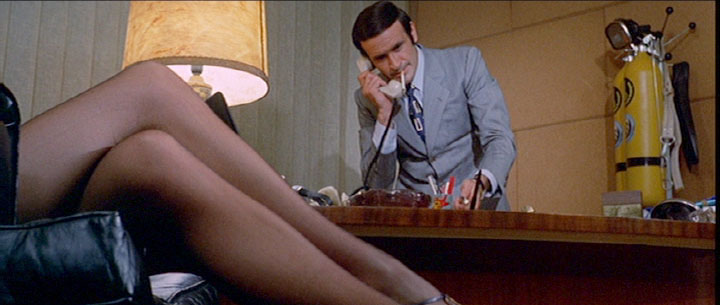
Despite this undeniable emphasis put on women, almost as a political statement, it is also interesting to see "Le foto proibite di una signora per bene" (1970), "La morte camina con i tacchi alti" (1971) and "La morte accarezza a mezzanotte" (1972) as visual testimonies of what state-of-the-art fashion and design meant in early 70s' Europe.
Building on glamourous lifestyles (Susan Scott is either a model or a dancer or even a lady with no other known activity than just taking pleasure out of life), these three movies are definitely landmarks of the genre: skirts, dresses, sunglasses, handbags, make-up and wigs - just remember Dagmar Lassander in "Photos..." - are displayed in an endless ballet, turning the movies into 90 minutes-catwalks in which the star of the show would be Susan Scott.

And indeed Susan Scott - aka Nieves Navarro - shines like a star in her boyfriend's movies. Everytime she's on screen she becomes the main focus and grabs attention like no other. So much so that when she disappears half-way through in "La morte camina con i tacchi alti", the film is somehow loosing its substance.
Evidence that in the end, all three movies would certainly not have been the same if Luciano Ercoli, decidedly a connoisseur, hadn't been in love with Susan Scott, decidedly a lady with an attitude.


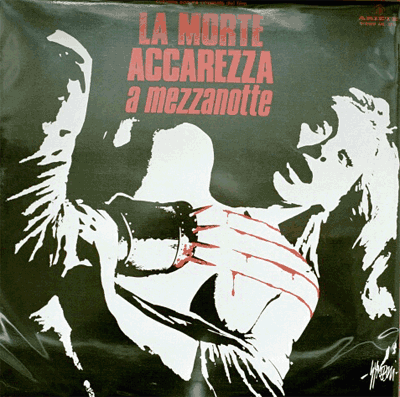
"Le foto proibite di una signora per bene" (Forbidden photos of a lady above suspicion - 1970), "La morte camina con i tacchi alti" (Death walks on high heels - 1971) and "La morte accarezza a mezzanotte" (Death walks at midnight - 1972) are three highly enjoyable gialli, with an outstanding collection of soundtracks composed respectively by Morricone, Stelvio Cipriani and the great Gianni Ferrio. Don't miss them.

Friday, June 23, 2006

Witch hunt


Marciara (Florinda Bolkan) leaves the village's police station in the early morning. She walks through the empty square, amongst the little white houses. She's free.
She had been arrested the day before, suspected of being the killer of three young boys. In fact she did not deny. She told the police she was guilty. She hysterically explained why she wanted to punish them and proudly described how she did black magic to do make the young boys die.
Yes she's the killer, and she's a witch!

Only trouble is the boys were strangled, a more down-to-earth way to die. Therefore Marciara the Witch can only be innocent. The rational thinking of the police sets her free, but also leaves her completely empty: if she has no magic power, then who is she but just a poor mad woman?

Now her mad eyes have turned to a sad and resignated expression, while she walks through the small streets of the village. She is harmless, she won't scare anybody anymore.
Yet the village inhabitants look at her suspiciously - after all, there's always been something wrong with that woman. She is the witch, so it's likely she killed their children.
They look at her as she walks past them. A look that sentences her to death.

On the way to her hideaway in the mountains, out of the village, she suddenly hears a noise. She knows exactly what is happening, and tries to run to hide in the graveyard nearby.
Too late. The villagers immediately catch her. Three of them, armed with wooden sticks and iron chains. They've turned on their car stereo loud, so nobody can hear the witch screaming.

The radio plays "
Quei Giorni Insieme a Te", by Ornella Vanoni, a beautiful song which becomes the soundtrack of her agony.

Bleeding and almost unconscious, she crawls in the dust to reach for the highway, where happy families pass by in their cars, not even seeing her.
There, a few meters from the asphalt, Marciara will die.
The modern world is oblivious to the death of a poor mad woman.


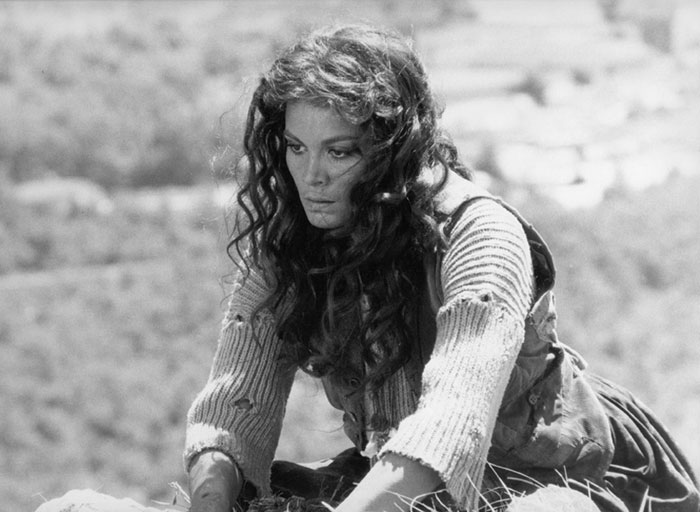
This extremely violent beating scene from Lucio Fulci's "Don't torture a duckling" is one of this masterpiece's highlights, thanks to Florinda Bolkan's stunning talent and Riz Ortoloni's evocative music which both give this moment an incredibly powerful emotional dimension. Get the score here and read more about this film here and there.

Saturday, June 03, 2006

Soundtrack extravaganza


Killing in Style has just turned a year. Let's have a party. Not forgetting I came to 60s & 70s films through their music, here are a few great places to visit for your ears' delight:

First of all, "Nova fait son cinéma" by Nicolas Saada, the best French radio broadcast dedicated to soundtracks. Every sunday at 8pm Paris time, you can listen to it live here (no podcast). And there is its blog, keeping a record of all the playlists.

Then, Radio Aperitivo, a cool pop music radio broadcast from Lyon, which has especially made two great downloadable programmes on 60s & 70s soundtracks here and there.

ScoreBlog is an audioblog only dedicated to film music, whatever their styles.

ScoreBaby's Annex is a recent audio blog created by "Score, Baby!", where you can find rare and out-of-print soundtracks to listen to.

Pretty new and groovy is the Winged Avenger, also with extracts from cool 60s/70s pop & film music.

Quite Quite Fantastic, the name says it all, with its unique compilations.

And finally, to buy the music (because you must support those small exciting labels), check out Movie Grooves, probably the most extensive soundtrack resource on the web.

This is it for the moment, but I'm sure there must be plenty of other cool places to discover (don't hesitate to post your own bookmarks in the comments section).

Tuesday, March 21, 2006

Take a walk with Gianni


Take a walk with Gianni Ferrio.
Or rather, let him take you for a walk throughout the refined paths of his elegant melodies.

Gianni Ferrio is a much less well-known composer than Morricone, especially in Giallo. Yet his music stands for me as the most delightful surprise of the genre's soundtracks.

It's particularly interesting noticing the differences between both musicians in the composition structure.
Morricone builds his scores on a simple and recurring theme, which somehow works like stones thrown on the water's surface: bouncing and developing circles in waves which grow and vanish, always moving back and forth. An almost fractal musical structure, both very tight and loose at the same time, which made his signature and probably produced the most beautiful themes ever written for films.

If Gianni Ferrio does not have this incredible consistency and strength within his own themes, he is definitely immensely talented for something different, very much ahead of its time: coming up with deliciously crafted pop melodies encapsulated in a mix of jazz and classical structure. This cross-over of musical genres is so natural in his compositions that it comes across effortlessly.

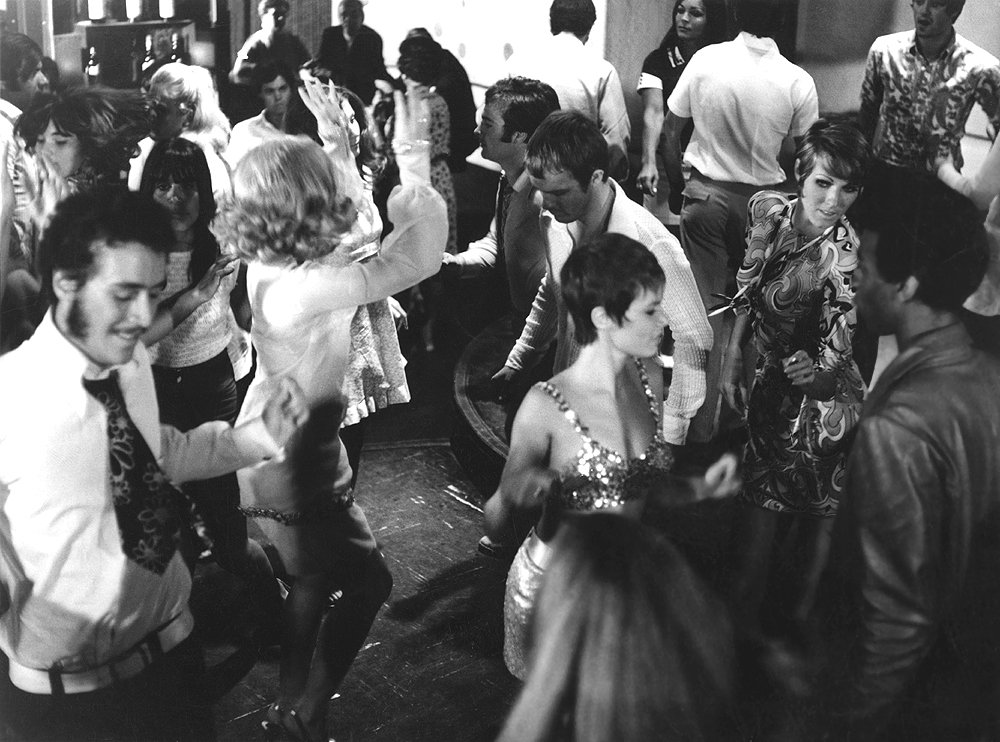
La Morte Accarezza a Mezzanotte is a great example: its theme was built on the main character, Valentina, like a pop-sounding starting point of both the film and the score, which later takes us through more jazzy sounds, nice acid jazz party snapshots and eventually easy listening flavours. It really feels like visiting a house: the general atmosphere remains consistent but depending on the moment and the room you're in, the atmosphere changes and you experience a variety of tunes few composers can compete with.

Another fantastic score is Una Farfalla con le Ali Insanguinate, which manages to mix Tchaikovsky's Concerto no.1 with a jazz tune and makes it sound perfectly elegant and balanced. Again this soundtrack feels like taking a nice walk through the park of an old house which classy owners all have something to hide. Not to forget this very melancholic core theme, reflecting the bitter reality behind a glossy surface depicted by the film. One of these scores which is completely tailor-made for the film yet has a life of its own.

Thanks for the nice walks, dear Signore Ferrio.


Gianni Ferrio's giallo soundtracks and more are available at Movie Grooves.

Saturday, February 11, 2006

On a train


There are different points of view about L'ultimo treno della notte (Night train murders, Aldo Lado - 1975). Some see it as just another "rape-and-revenge" flick, others say it's a copycat of Wes Craven's "Last house on the left" (1972).
In fact, it's a film which leverages a well-known scenaristic frame to convey a political statement about 1970s' Europe.

30 years after, and seen from other cultures, this political dimension could well be not so obvious. However it is this particular element which makes it such a unique film - and the terrible translation of the title into 'Night train murders' totally undermines the initial symbolical meaning of 'The last train of the night'.

It is a social journey between Germany and Italy, surrounded by the shadows of fascism - the German war veterans singing 3rd Reich songs in their cabin -, terrorism of the Red Brigades - the first train stops because of a bomb alert -, cynically questioning the dark side of the Church - the senile bishop glancing at a young priest, and later this obvious physical connexion made by Lado between the bishop seen in the first train and a very unappealing prostitute in the second one -, and above all denouncing the overwhelming power of the upper class, the "Bourgeoisie".

A metaphor where the woman with no name (Macha Méril) epitomises Bourgeoisie, with her veil as a sign of respectability as much as duplicity - and somehow of death.
She is the puppetmaster, cynically manipulating two hooligans - the embodiement of the lower class - to achieve her selfish and vicious goals (raping two young girls on the train). She will later get rid of the two guys by abandoning them to the revenge of the desperate father.
They will end up crawling on the ground like agonising animals.

A fatalistic tale about the ineluctable loss of innocence and its irreversibility.
Once the damage is done, there is no escape: one of the girls dies, the other one has no other choice but to commit suicide.
The implacable build up to a fatal end is very cleverly encapsulated in the idea of the train: a journey you can't deviate from, in a claustrophobic environment.
This is why the real score of this film is the noise of the train, which becomes overwhelming throughout the movie, and sometimes even covers scenes disconnected from the train itself.

In this context, it is interesting to point out that Morricone's score is very minimalist, yet very powerful. A few harmonica notes, highly reminiscent of "Once upon a time in the West", which reinforce the anguish, especially since they're played by one of the two villains.
Strangely enough, music from Morricone scores made for other films can also be heard, as if he was quoting himself: the opening pop track of "Four flies on grey velvet" when the two thugs reach the train station at the beginning of the film, and a reinterpretation of "L'Assoluto Naturale" theme at the end, heard through a radio in the parents' house.

At the end of this trip, there's no justice to be found, no hope to take away ; just the bitter taste of a crude representation of society's cruel games, somehow still relevant today.


L'Ultimo Treno della Notte was one of the two films shown at La Cinémathèque in Paris, during an evening dedicated to Aldo Lado on February the 3rd.

Thursday, January 26, 2006

The first impression matters


On the music of Gianni Ferrio's extremely elegant soundtrack,
framed by the silhouette of a butterfly,
a blue Fiat 124 Spider zooms on a small Italian country road.
It's driven by a very stylish brunette who eventually stops the car in front of her house.

Then the camera smoothly pans to introduce the other characters of the drama, caught in various places at the same moment. They are identified by carefully designed supers indicating their names and their respective links - exactly like a filmed version of a character list in a play.

This is the very sophisticated opening sequence of Una farfalla con le ali insanguinate (The bloodstained butterfly - Duccio Tessari, 1971), a giallo which could well be of a different flavour.


More about this film soon. In the meantime, find the movie here and do not miss Ferrio's great blend of classic and jazz melodies there.

Sunday, January 08, 2006

Decadence


There's a fragrance of the XIXth century decadent literature floating in the atmosphere of
ll tuo vizio e una stanza chiusa e solo io ne ho la chiave (Your vice is a locked room and only I have the key, 1972 - Sergio Martino/Ernesto Gastaldi).

First this title, outrageously long, twisted and complex, which was actually taken from a dialogue between Rassimov & Fenech in Martino's first Giallo: The strange vice of Mrs. Wardh. A reflections of the twisted mind games at work in the film.

Then, the figure of the decadent writer, uninspired and bitter, who despises the others as well as himself, living in the memory of the past, in adoration with the incestuous souvenir of his mother - who from the start is described both as a Lady and a whore -, driving a somptuous 1930s black and deep blue BMW 327 and dedicated to making his wife miserable.

Also, the decaying manor, which precious furniture the writer is forced to sell as he's progressively running out of money, his mother's ancient dress secretly worn by a young black beauty tragically murdered a moment after, the masochistic wife whose life seems to be an endless tunnel of pain, and
the beautiful cousin Floriana whose bisexual tendencies serve her materialistic purposes.

Not to forget Bruno Nicolai's great score, chamber music with a typical 70s erotic flavour, which distills a distinguished yet sleazy feeling to it all.

The inner violence and ambiguity of the character's relationships, and the colours, the style, the costumes, the sounds it's wrapped in make the atmosphere of this huis-clos completely suffocating.
Like a world about to collapse.


Despite being underrated, "Your vice is a locked room and only I have the key" is an original take on Giallo by Sergio Martino & Ernesto Gastaldi. Find it here.
And for the soundtrack, it's there.

Thursday, December 15, 2005

Edwige's rival


Milan, 1973. To the melody of a sophisticated easy-listening tune, a beautiful young woman decidedly walks into the hall of a modern building and starts joking with the portier.
From the first second, we know that she will not be the usual Giallo heroine - fragile, scared and vulnerable.

As Gianni Ferrio's beautiful music theme goes on, a choir of singers reveals her name: Valentina.
Valentina is Susan Scott, aka Nieves Navarro. In "Death walks at midnight" (Luciano Ercoli, 1973), she introduces a new feminine figure in the genre: empowered, hot tempered and all but shy; she's the screaming queen with an attitude.
A very interesting feminist take on the Giallo heroine, perfectly symmetric to the usual Edwige Fenech part.

Valentina/Susan Scott is very much at the core of the film and definitely drives it from the start.
Not fully though: the first sequence shows her, a fashion model, being set up by her boyfriend in an experimental photoshoot on drugs - where she becomes the witness of a murder. While she thought the experiment would remain anonymous, the next day she finds herself on the cover of a tabloïd which headline reads: "Valentina under the effect of HDS".

Then she starts being very angry.


If "La Morte accarezza a Mezzanotte" is not a great giallo, it is certainly very sophisticated from a cinematographic point of view, and its score is one of the most interesting I've come accross, clearly contributing to the great aesthetics of the film.

Sunday, December 04, 2005

The sound of confusion


Staging the soundtrack’s main theme within the film scenario itself was one of Lucio Fulci’s very interesting ideas in “A lizard in a woman’s skin”.

The theme, which is once again a wonderful one from Ennio Morricone, perfectly reflects the abyss of confusion in which Carol (Florinda Bolkan) is slowly sinking across the film.
As usual
, the music is used as a recurring pattern. However, with one character it becomes a key element of the scenario: Inspector Corvin (Stanley Baker). Each time he appears in the screenplay, he is shown whistling the theme, in a fashion very reminiscent of Sergio Leone's western (where the characters are strongly identified by their musical theme).

This use of a musical pattern within the scenario is quite unusual in a Giallo. It is very interesting because it builds a link between the two characters on which the film will eventually close: Carol, who can't cope with her inner dilemma, as reflected in the main theme, and the inspector, who from the start, by whistling the very same melody, shows her he has already understood what's happening in her mind.

By this clever use of a simple musical device, Fulci makes it clear that the inspector's deduction technique is a more efficient tool than the psychoanalyst's skills to find the truth and read Carol's twisted mind.
Which means, in this otherwise irrational movie, it surprisingly sounds like the final say is left to rational thinking.


Una lucertola con la pelle di donna's soundtrack can be found here.
More from this blog about this film here and there.

Sunday, November 13, 2005

La musica dello scorpione


In the shadow of Morricone, Bruno Nicolai.
A discreet person, Nicolai (1926 - 1991) is essentially known for being Ennio Morricone's conductor, even though he was also a talented composer who demonstrated his skills throughout a number of film scores, among which quite a few gialli.

"La Coda dello Scorpione" (the case of the scorpion's tail - Sergio Martino - 1971) is one of Bruno Nicolai's very interesting soundtracks, as it's a musical journey into a very diversified mix of styles, from typical italian easy listening to more experimental and intricate tunes.

The main theme in particular is a fantastic musical support for the film's opening scene, where we follow a woman wearing a large red hat in the streets of London, as if we were litterally about to knock on her shoulder. The tune, which I feel was very much ahead of its time, sounds like a crossover between Morricone, Goblin and John Carpenter.
Morricone for the use of what sounds like a harpsichord as the main instrument, the backbone of the music.
Goblin for the scary synthetic sound which blossoms in a sinister way across the score.
And Carpenter for the simplicity, the economy of superfluous effects which gives the melody incredible power and sets up the strong tension within seconds.

Rarely has a soundtrack managed to convey such a strong threatening feeling in such a classy style. Well before Goblin or Carpenter themselves.


To hear more and buy this great soundtrack, just click here.

Wednesday, October 26, 2005

Milk

When Kathy Adams (Marina Malfati) heard her three cats crying in the kitchen just after she had given them some milk, she realised something wrong was going on.
Indeed, they sounded like desperate baby cries.
She was to find all three of them agonising on the kitchen floor a second later, poisoned by their own milk.

That disturbing scene which makes you feel uncomfortable, because of its clever ambiguous use of the cat's crying sound, is the only one worth noticing from Umberto Lenzi's "Seven Blood Stained Orchids" (1972). It is by the way reminiscent of the "milk glass" scene from Argento's "Cat o'nine tails" released the year before.

Apart from this, a very bland giallo to which Riz Ortolani manages to give some kind of pace, thanks to a nice jazz-soul score with hints of Morriconesque tonalities.

Tuesday, October 11, 2005

Hamilton meets Lynch


Part of the mysterious charm of "What have you done to Solange?" (Massimo Dallamano - 1972) is probably that it is a very elegant voyeur movie.

From the first seconds of the opening credits, where teenage girls are cycling through the countryside in an orange monochrome tone, we understand there is more to these images of innocence than meets the eye. And we want to know and see what it is.

Something terribly wrong floats in a gently erotic atmosphere, as if David Hamilton's and David Lynch's worlds had perfectly merged together to give birth to an evil kind of beauty. This is reinforced by Ennio Morricone's poisonous soundtrack, as sophisticated and aerial as ever.
It is a beauty which is irresistible, so innocent and perverse at the same time, so inaccessible... so close to its own tragic end.

This highly ambiguous shower scene perfectly encapsulates what this great giallo is: a twisted beauty you secretly watch through a keyhole.

More on "Solange" from this blog here.

Tuesday, October 04, 2005

The prey

That scene.
That famous scene from Antonioni's "Blow-Up". Even if you haven't seen the film, you know about it: Thomas (David Hemmings), a fashion photographer, has a shooting session with Verushka, one of the 60's most famous models.

Watch it again. Listen to Herbie Hancock's laidback jazz. It sounds really cool. It looks very glamourous. Yes it almost feels like Thomas is making love to Verushka as they dance a sensual ballet together while he's taking pictures of her.

But look closer: isn't Verushka surrendering? Isn't Thomas taking over her in a very eager way? Hasn't she become his prey?
In this scene, Thomas shows his true colors. He is a predator. He is annihilating Verushka as he's forcing her onto the floor and stealing her very image.

It is not a love scene, it is a highly aesthetical crime scene.


More on Blow-Up, one of Giallo's greatest sources of influence, here.
If you have not seen this chef-d'oeuvre, then rush there. And find the soundtrack here.

Monday, September 05, 2005

Born too late

In giallo, there seems to be a pre- and post-Deep Red era. As if after Argento's masterpiece, any other giallo would be made in vain.

Solamente Nero (The Bloodstained Shadow - Antonio Bido, 1978) clearly belongs to the post-Deep Red period.

Not that it's a bad giallo. Actually its opening scene is visually striking and catches you within seconds. The plot as well is rather good, as twisted and dark as it can get (and the doll dismembering scene alone is sick enough to make this film worth seeing).

Music is also a highlight, building angst in a very modern way. Composed by Stelvio Cipriani, it was nevertheless performed by Goblin for obscure money questions with their label, Cinevox.
And even this simple fact that the score comes from Goblin immediately puts this film in a "post-giallo golden age" period.

Bido's mise-en-scène is quite daring and imaginative, yet the overall feeling is that even he does not completely believe in what he's doing. All the right ingredients are here, but the plate does not taste as good as it should. Maybe it was served too late.

And this might well be the key: Antonio Bido made this film too late. As if he wanted to move back in time, to compensate for missed opportunities. As if it was a "remake".
The director knows this: in the DVD's extras, he first stresses the fact that he had some influence on Dario Argento's work... and finally regrets he did not shoot more giallos.

"Solamente Nero", the nostalgic giallo.


As an illustration, the location of this film strongly contributes to this strange feeling: read more here from this blog.
And get the film there, from Anchor Bay.

Thursday, September 01, 2005

Duel of genres

"The Strange Vice of Mrs. Wardh", a giallo which finds its resolution in a western.

This is another example of the great ideas Sergio Martino came up with for his very first giallo. As we're about to unveil the key to the story, the film brutally switches from typical giallo codes (black gloves, blades, darkness, mystery, light eroticism) to overt western elements (desert, guns, bright daylight, dust, close-ups on the eyes and... a duel).
Daring is the least I can say.

And we buy into it, as the photography remains consistent.
Martino has a fashion designer's eye. Every little detail or accessory seems to be thought of as if it was crucial to the beauty of the overall picture, just like in a fashion shoot. "Killing in style" has never been more appropriate: the flat's interior design, Julie and Carol's clothes and shopping session, Jean's threatening beauty, George's playboy apparel....

Even Nora Orlandi's great music never forgets to be elegant, whatever happens in the film. The score works like the final touch in many scenes - and capriciously disappears when you expect it to come back: like in this final western-like duel scene, for example.

Aesthetically mixing different styles together is the specificity of what the Italians call "filone": contrary to the genres - a very anglo-saxon concept which requires a clear and definitive definition of its components -, filone ignore boundaries, evolve over time and can borrow from each other without losing any of their strength. Just like rivers.

Read the very insightful analysis about genre vs filone by Gary Needham here.
More about this great giallo from this blog there.

Tuesday, August 30, 2005

The camera is the weapon.

Forget one minute about the classic Giallo formula: black gloves, shining blades and blood-dripping.
Keep in mind the giallo's underlying themes: the eye-witness, violent seduction relationships between men and women, the pre-eminence of an aesthetical point of view...

When you look at it through this angle, then Blow-Up (Michelangelo Antonioni, 1966) can be considered a giallo masterpiece. One which would have been completely re-shaped by Antonioni's minimalist eye, but featuring the very same ingredients.

Not to mention Herbie Hancock's score, which is an American musical view on Swingin' London, filmed by an Italian - Distanciation also is part of the Giallo.

In 1966, Antonioni probably laid out in Blow Up the key ideas that would become the genetic code of Giallo in the late 60s and early 70s.